Two years ago, every Indian interior blog had the same list: curves, fluting, warm earth tones, arches, Japandi. We wrote one of those lists ourselves. The interesting question now is not which trends were predicted — it's which ones actually made it into real homes in Chennai, Bangalore and Hyderabad, and which ones quietly disappeared.
This is a 2026 review. We've worked on around 1,500 homes in the last 24 months, and the pattern is clear: about half the 2024 forecast became the new default, and the other half is now a sign that a home was designed two years late.
What's in vs what's out in 2026
✓ Stuck and went mainstream
- Fluted and ribbed cabinet panels
- Warm earth tones (terracotta, sage, olive)
- Curved sofas, kidney coffee tables
- Arched niches and pooja unit alcoves
- Textured walls (limewash, sand plaster)
- Japandi as a default language
- Warm metals — brass, antique bronze
- Boucle, linen, slubbed upholstery
- Stone-look surfaces (real + sintered)
- Indoor plants integrated into joinery
✗ Dated by 2026
- All-white everything
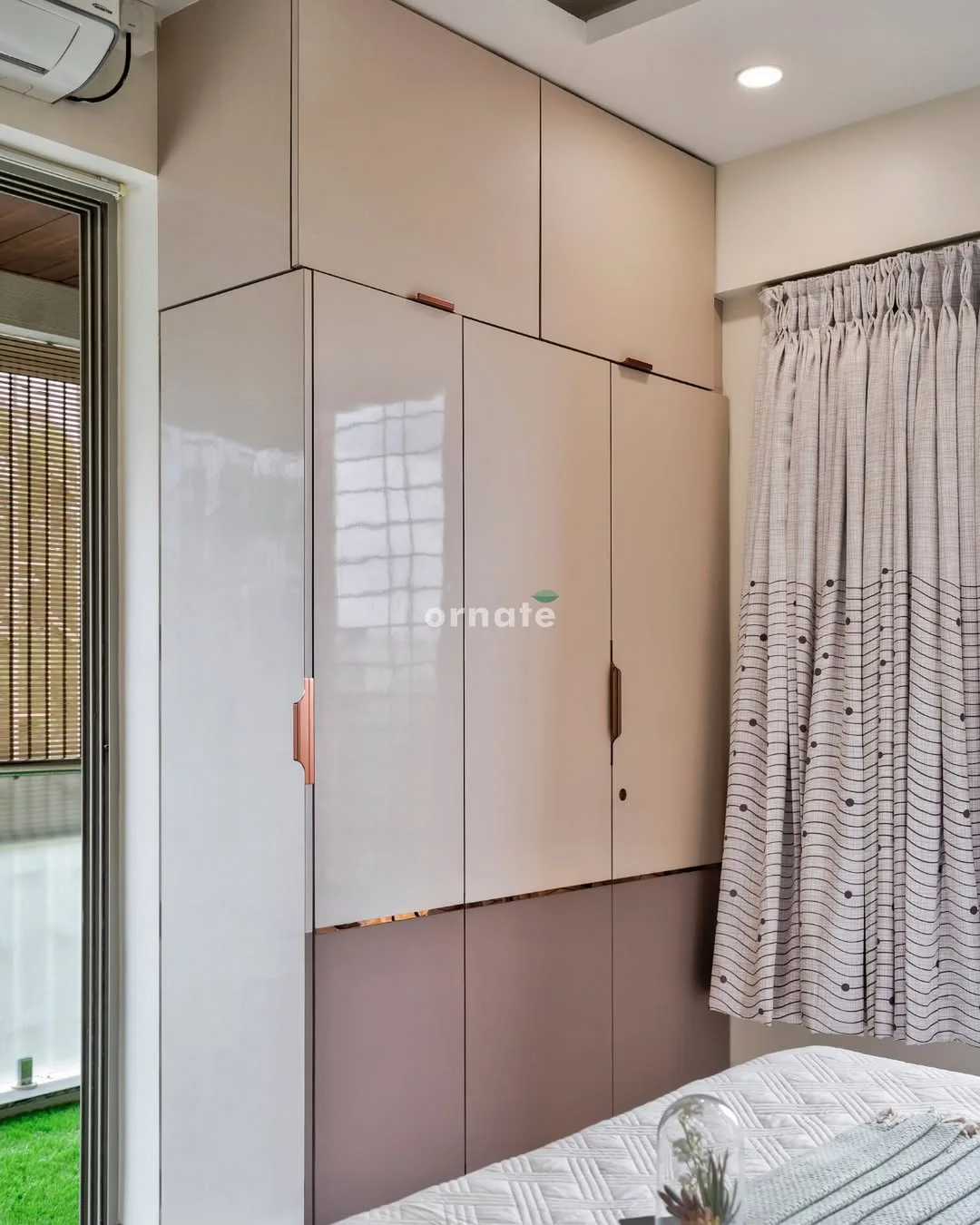
- Rose-gold hardware
- Rustic shiplap and barn-wood panels
- Industrial bare-concrete looks
- Edison bulb exposed-filament overuse
- Cold grey palettes
- Heavy macramé and dreamcatcher decor
- Ultra-handleless flat-panel kitchens
- Single bright ceiling lights per room
- "Live, laugh, love" wall typography
The 2024 trends that became the new default
1. Fluting and ribbed panels — now everywhere
Fluting was the strongest call. Two years on, vertical fluted strips are on TV unit fronts, kitchen island sides, wardrobe centre panels and bedroom headboards in roughly 7 out of 10 mid-tier and premium homes we deliver. It works because it adds tactile texture without committing to a colour or pattern, and it photographs beautifully — important when buyers see homes online before visiting.
The 2026 evolution: fluting is now being done in PU paint and tinted veneer (not just laminate), with deeper ridges and tighter spacing. Cheap, shallow MDF fluting from 2024 is now the giveaway of a budget job.
2. Warm earth tones replaced cold greys
Terracotta, rust, sage green, dusty olive, warm beige — earth tones have completely replaced the cold grey palettes that dominated Indian homes from 2018-2022. The shift makes sense: warm tones suit the natural light in Chennai, age slowly, and forgive small handling marks better than grey.
What's new in 2026: tonal palettes within one family. Instead of "terracotta accent on a white wall," a 2026 living room might be three shades of warm beige, with the wood and the upholstery and the rug all in the same family. Quieter, harder to get wrong, more expensive-looking.
3. Curved furniture went from trend to expected
Rounded-back sofas, kidney coffee tables, curved console tables, circular mirrors — these are no longer "design forward" in 2026. They're what people expect a modern Indian living room to look like. The angular, sharp-edged furniture of the late 2010s now reads as outdated.
4. Arched niches became the new pooja unit
The arch is the cleanest example of a 2024 prediction that became a real design pattern. In Chennai apartments, we now build arched niches into pooja units, TV walls, bar shelves and bedside alcoves in almost every premium-tier home. It softens the rectangular geometry of a flat without needing structural work.
Arches are built using a false wall in plywood + MDF, finished in PU paint. Budget around ₹18,000-25,000 per arched niche depending on size and finish — much cheaper than a full structural change.
5. Textured walls finally broke through
Limewash, Venetian plaster and sand-finish wall treatments were a tough sell in 2024 — most homeowners worried about humidity, maintenance and resale. By 2026 the worry has eased: better moisture-resistant primers and acrylic-modified limewash now hold up in Chennai's monsoon. We're applying textured finishes on TV walls and headboard walls in roughly 4 out of 10 premium homes now.
6. Japandi stopped being a "trend"
Japandi — the Japanese-meets-Scandinavian aesthetic of warm minimalism — is no longer something we tell clients about. It's the baseline. Clean lines, natural materials, muted warm palette, functional joinery. If a designer is still pitching this as a "trend" in 2026, they're behind.
The full guide: Japandi interior design for Chennai homes.
The 2024 trends that didn't make it
All-white interiors — officially dated
Pure-white walls + white cabinets + white sofa is now the surest sign that a home was designed before 2024. Beyond the aesthetic ageing, the practical reason is Indian: white shows turmeric splatter, sambar splash and Chennai dust within months. Warm whites and warm greiges replaced it.
Rose-gold hardware — gone
Rose-gold drawer pulls and tap fittings peaked in 2022 and faded fast. By 2026 the warm-metal slot is held by brass (real and brushed) and antique bronze. Anyone installing rose-gold hardware new in 2026 will regret it within a year.
Industrial concrete look — too cold for India
Bare concrete walls and exposed ductwork worked in some commercial spaces but never translated to Indian homes. Concrete-look microcement on accent walls is still occasionally used, but the full industrial look is over.
Edison bulb overuse — finally calmed down
Exposed-filament Edison bulbs hanging from black braided cord were everywhere from 2019-2023. In 2026 they're a cliche. The replacement is multiple low-watt warm sources (3000K) layered through the room — wall sconces, pendant + table lamp + indirect cove. The single "feature bulb" moment is gone.
What's new in 2026 — the trends that didn't exist in 2024
1. Quiet luxury
Fewer statement pieces, more material honesty. Real stone instead of stone-look laminate where the budget allows. Real wood veneer instead of printed laminate on visible surfaces. No logos, no flash. The home should look expensive without anything being obviously expensive. This is the strongest 2026 shift.
2. Tonal palettes
Instead of a "neutral + accent" colour scheme, the 2026 approach is one colour family in 3-5 shades. A whole living room in warm beiges and oats, or a whole bedroom in olive greens and sages. The eye stops looking for the "pop" and starts noticing texture and proportion instead.
3. Mood-zoned lighting
One bright ceiling light is now the mark of an unfinished home. In 2026 a well-designed living room has 4-7 light sources: cove, wall sconces, table lamp, floor lamp, kitchen under-cabinet, dining pendant — each on a separate switch or scene. We build in DALI or simpler Lutron-style controls in premium projects so the room can be a "movie mood" or "morning coffee mood" with one tap.
4. Disappearing tech
The 2024 trend was visible smart home — touch panels on every wall, exposed sound bars, statement projectors. The 2026 trend is the opposite: motorised TV lifts hidden in TV units, in-ceiling speakers, smart switches that look like normal switches, charging ports cut flush into the dining table. The technology serves the room, doesn't decorate it.
5. Real plant integration
Plants are no longer a corner pot. In 2026 we're designing planters into kitchen islands, dining table centres, partition screens and headboard ledges. The plants become part of the joinery, not an afterthought.
The fastest way to tell a 2026 Chennai home from a 2024 one isn't a single feature — it's the lighting. Old homes have one bright bulb per room. New homes have five low-watt warm sources doing different jobs.
Chennai-specific adaptations
Trends don't translate one-to-one into Chennai's climate and apartment culture. Here's what we adjust:
- Textured walls + humidity: use moisture-resistant primer (Asian Paints Damp Block, Berger WeatherCoat) under any limewash or sand-finish plaster. Skip raw plaster in bathrooms entirely.
- Real wood + termites: any real wood veneer or solid wood used in Chennai needs anti-termite primer and lacquer. BWP marine plywood as the carcass is non-negotiable.
- Biophilic plants + low light: Chennai apartments often have only 1-2 bright-light rooms. Stick to shade-tolerant species — snake plant, ZZ plant, pothos, monstera — and avoid sun-hungry plants like rubber tree near interior walls.
- Large windows + south-facing rooms: install UV-filter sheers and blackout curtains. South-facing flats on OMR get furniture-fading sun for 6 hours a day.
- Warm metals + coastal humidity: brass and bronze handles closer to the kitchen / bathroom develop a green patina in Chennai. Lacquer them after installation, or use PVD-coated alternatives.
Our senior designers apply these climate adjustments as standard — so you get the international trend without the Chennai-specific failure modes.
What this means for your project
If you're starting an interior project in 2026, don't ask a designer for "trendy" — ask them for "ages well". Most of the 2024 trends that aged well were the structural ones (curves, arches, fluting, textured walls, warm metals) and most of the ones that aged badly were the surface ones (specific bulb styles, specific colour combos, specific finish brands). The structural choices are where the budget goes; get those right and the room will look intentional in 2030.
For costs and timelines on a trend-aware Chennai interior in 2026, see our interior design cost guide or get a free site-visit quote using the form on this page.
Frequently asked questions
Which 2024 interior design trends have stuck in 2026?
Fluted and ribbed surfaces, warm earth tones, curved furniture, arched niches and textured walls have all stuck and gone mainstream in Indian homes by 2026. Japandi has become a default style language, not a trend. What's faded is all-white minimalism, rose-gold hardware and rustic shiplap panelling.
Is all-white interior design still popular in India?
No — all-white interiors peaked around 2022 and declined steadily. By 2026 they look dated in most Indian homes. The replacement is warm whites, off-whites and warm greiges paired with wood, stone-look surfaces and brass or bronze accents. Pure white also shows kitchen and corridor grime faster, which makes warm neutrals more practical.
Which interior trends work best for Chennai's humid climate?
In Chennai humidity, textured walls need moisture-resistant primer and paint, biophilic plants should be shade-tolerant species, large windows need UV-filter curtains for south-facing rooms, and natural materials like rattan and cotton breathe better than velvet or wool. BWP marine plywood with anti-fungal lacquer is essential for any wood-look surface.
What new trends are emerging in 2026?
In 2026 we are seeing a shift toward quiet luxury — fewer statement pieces, more material honesty (real stone, real wood veneer), tonal palettes within one colour family, mood-zoned lighting (multiple low-watt sources instead of one bright fixture), and integrated tech that disappears into joinery rather than showing off.
How much does a trend-led 2BHK interior cost in Chennai in 2026?
A trend-aware 2BHK full-home interior in Chennai costs ₹4.5–9 lakh in 2026 depending on tier. Mid-tier (around ₹6 lakh) gets you fluted wardrobe centres, a warm earth-tone palette, arched niches and BWP marine plywood. Premium (₹8–9 lakh) adds Japandi-spec joinery, real stone-look surfaces, integrated lighting and brass hardware.
Want a 2026-current home, not a 2024 one?
Free site visit, 3D walkthrough and an itemised 3D design concept and transparent quote within 48 hours. No advance. Designed by senior designers who have delivered Chennai homes.
Book Free Consultation →