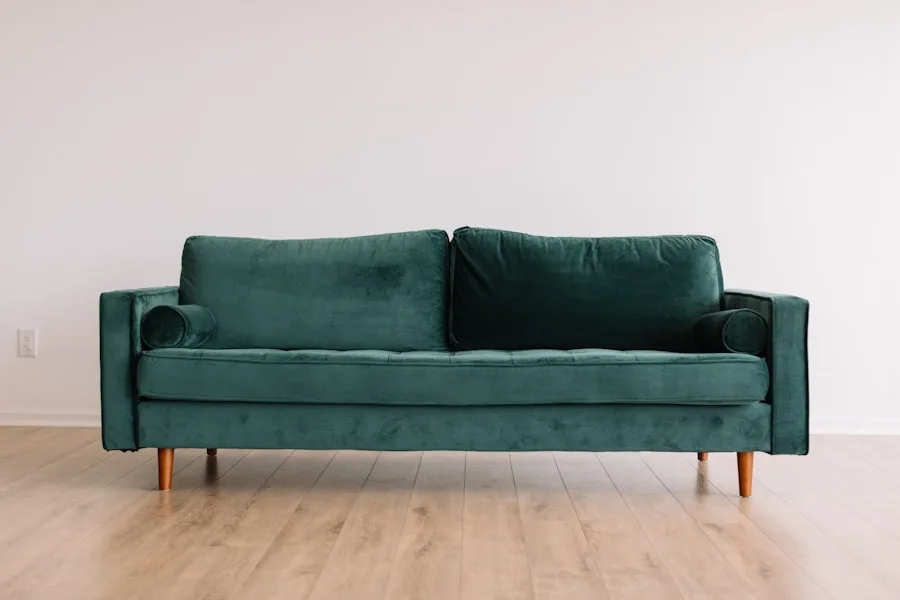
Getting the sofa placement right is the single most impactful furniture decision in your living room. The right placement determines how open the room feels, how comfortably people can watch TV, and whether conversations happen naturally or awkwardly. Here's a room-shape-by-shape guide.
Square Room (e.g., 12×12 or 14×14)
A square room is the most flexible shape. The best approach: floating arrangement — pull the sofa away from the wall and anchor it with a rug. Place the 3-seater sofa facing the TV, and two armchairs at 90° angles on either side. This creates a natural conversation circle while maintaining the TV-viewing axis.
Avoid pushing all furniture against the walls in a square room — this creates an empty void in the centre and makes the room feel like a waiting hall.
- Main sofa: facing TV, pulled 30–45 cm from the wall
- Side chairs: at 90° from sofa, defining the seating zone
- Coffee table or ottoman: centred in the arrangement
Rectangular Room (e.g., 10×16 or 12×18)
A rectangular room creates a long axis and a short axis. The TV belongs on a short wall and the sofa faces it across the long axis — this maximises the viewing distance. An L-shaped sectional works brilliantly here, tucked along two walls at the far end of the room.
If the room is very long (18+ ft), consider defining two zones: a TV-watching zone at one end and a conversation or reading nook at the other end. Use a large rug to demarcate each zone.
Narrow Room (e.g., 9×16 or 10×18)
In a narrow room, push the sofa against one long wall and mount the TV on the opposite long wall. This creates maximum floor clearance down the centre of the room. Use a shallow-depth sofa (seat depth 55–60 cm instead of the standard 65–70 cm) to preserve walkway width.
Avoid placing the TV on a short wall in a narrow room — it forces a very awkward viewing angle from any sofa position.
Open Plan Living + Dining
When the living room opens into the dining area (common in new Chennai apartments), use the sofa back as a natural room divider. Position the sofa with its back facing the dining zone — this creates a visual barrier between the two areas without a wall. A large area rug under the living room seating reinforces the zone definition.
See our open plan living + dining design guide for more detailed zoning ideas.
Sofa Size Guide for Indian Apartments
| Room Size | Recommended Sofa | Notes |
|---|---|---|
| 10×10 ft | 2-seater (170–180 cm) | Wall-mounted TV only |
| 10×12 ft | 3-seater (220–240 cm) | Skip centre table, use ottoman |
| 12×14 ft | 3+1 or small L-shape | Floating arrangement works |
| 14×16 ft | Full 3+1+1 or large L-shape | Centre table + side tables |
| 16×18 ft+ | Large sectional | Two seating zones possible |
The Golden Rules
- TV viewing distance: Sofa should be 1.5–2.5× the screen diagonal from the TV
- Walkway clearance: Minimum 90 cm on all sides of the sofa that face a walkway
- Sofa-to-coffee-table: 35–45 cm gap — comfortable to put down a cup but not too far to reach
- Rug size: Front legs of all seating pieces should be on the rug; ideally all four legs
- Back from window: Keep sofa at least 15–20 cm from window sill to allow curtain clearance
Frequently Asked Questions
Also read: Small Living Room Ideas · Open Plan Living + Dining Design · Interior Designers in Chennai