Both types have real advantages. The right choice depends on your bedroom size, how you use your wardrobe, and your budget. Here's everything you need to decide.
The Core Difference
A sliding wardrobe has panels that glide on tracks. You access the wardrobe by sliding one panel behind another. It needs no clearance space in front — ideal for tight rooms.
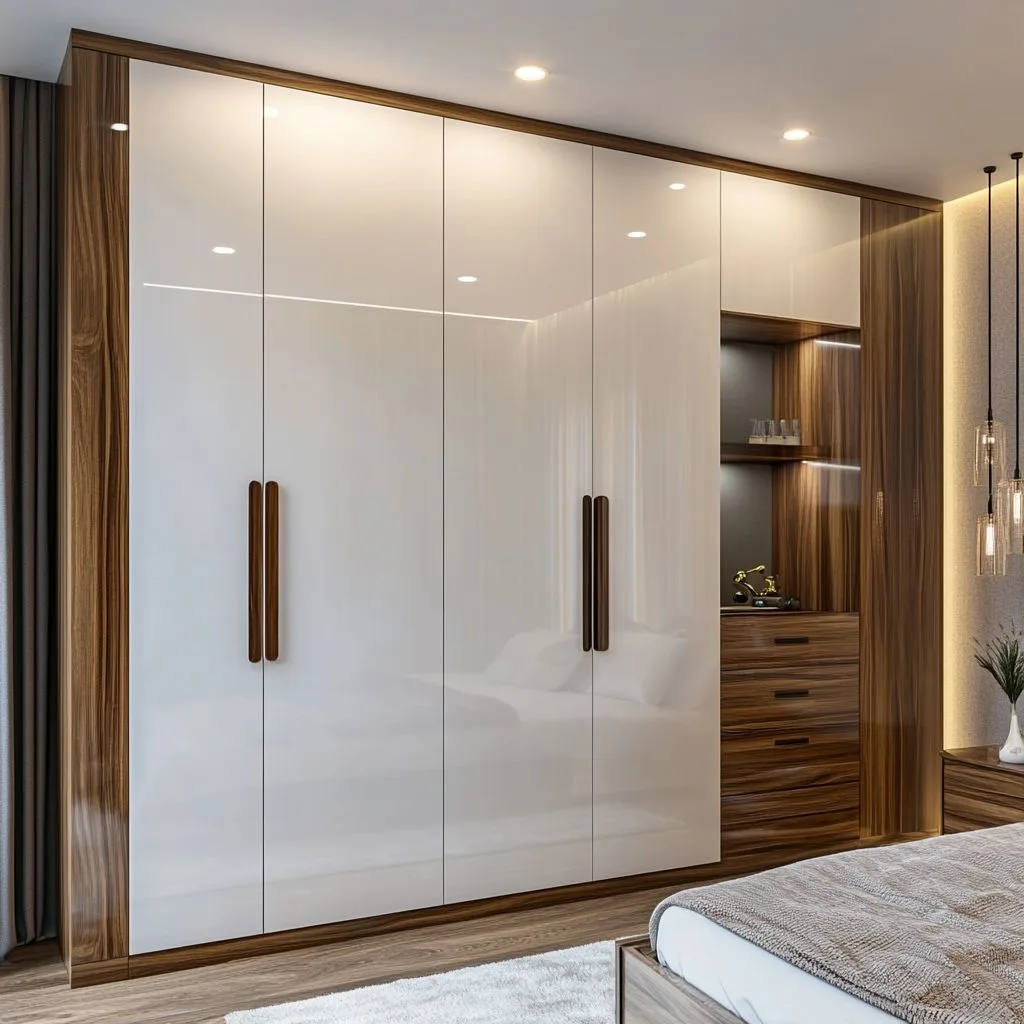
A hinged wardrobe has doors that swing outward on hinges. You can open all doors fully for a panoramic view of the entire interior. It needs 500–600mm of clear space in front for the doors to open without hitting furniture or walls.
Side-by-Side Comparison
| Factor | Sliding Wardrobe | Hinged Wardrobe |
|---|---|---|
| Floor space needed | None in front | 500–600mm clearance |
| Access to interior | Partial (one panel blocks another) | Full (open all at once) |
| Cost (same size) | 15–25% more | Lower |
| Aesthetics | Sleek, modern | Classic, traditional options |
| Best room size | Small to medium | Medium to large |
| Door materials | Glass, mirror, wood, fabric | Wood, glass, louvres, solid |
| Maintenance | Track cleaning needed | Hinge adjustment occasionally |
| Loft integration | Less flexible | Easy to add loft above |
| Longevity | Track can wear (10–15 yrs) | Hinges last 15–20 yrs |
| Customisation | Limited to panel configurations | Very flexible inside layout |
When to Choose Sliding
Choose Sliding Wardrobe When:
- Your bedroom is under 10×10 ft — every cm matters
- The wardrobe is placed opposite the bed and hinged doors would block walking space
- You want a wall-to-wall fitted wardrobe along one full wall
- You prefer a contemporary, seamless aesthetic
- The wardrobe has mirror panels (sliding mirror wardrobes make rooms look bigger)
When to Choose Hinged
Choose Hinged Wardrobe When:
- Your bedroom is larger (12×14 ft or bigger) — there's room for doors to swing
- You want full visibility of all your clothes and shelves at once
- You prefer a traditional or transitional look
- Budget is a consideration — hinged is typically cheaper
- You want a loft unit above the wardrobe
- You prefer a specific door style: louvred, panelled, glass insert
Door Material Options
Sliding Door Materials
- Mirror: Makes room appear larger; great for dressing. Most popular choice in Chennai
- Frosted glass: Elegant, partially see-through; hides clutter gently
- Acrylic gloss: High-shine, colourful; premium look
- Cane or fabric insert: Textured, warm; current trend
Hinged Door Materials
- Solid wood/laminate: Classic and versatile; widest colour range
- Glass insert panels: Decorative; shows display shelves inside
- Louvred: Allows air circulation; traditional style
- Mirror full panel: Same benefit as sliding mirror doors
Frequently Asked Questions
Do sliding wardrobes save more space than hinged?
Yes. Sliding doors need no swing-out clearance space — you only need the depth of the wardrobe itself. Hinged doors need 500–600mm of clear floor space in front to open fully. In small bedrooms under 10×10 ft, sliding saves significant usable floor area.
Are sliding wardrobes more expensive than hinged?
Sliding wardrobes are typically 15–25% more expensive than hinged wardrobes of the same size due to the sliding track mechanism. The track quality (Hettich, Hafele) significantly affects the long-term experience.
Which wardrobe type gives better access to all sections?
Hinged wardrobes give better access because you can open all doors fully and see the entire interior at once. Sliding doors always have one panel covering another section — you can't open the full wardrobe width simultaneously.
Can I convert a hinged wardrobe to sliding?
Yes, if the wardrobe carcass is structurally sound, a skilled carpenter can retrofit a sliding door track system. The cost is typically ₹8,000–₹20,000 for the track and new doors, depending on wardrobe width.
Related: Wardrobe Designs · Wardrobe with Mirror Designs · Small Bedroom Wardrobe Ideas