The Numbers Don't Lie
The efficiency comparison between LED and traditional lighting types is stark:
| Light Type | Watts for 800 lm | Lifespan (hours) | Heat Output |
|---|---|---|---|
| Incandescent | 60W | 1,000 | Very high (90% waste heat) |
| CFL (Compact Fluorescent) | 13–15W | 8,000–10,000 | Moderate |
| LED | 8–10W | 25,000–50,000 | Low (10–15% heat) |
For a typical Chennai apartment running 15 light points for 6 hours/day: switching from incandescent to LED saves approximately 750W × 6 hours = 4.5 kWh per day, or about 135 kWh per month. At Chennai's electricity rate of approximately ₹5–7/kWh, that's ₹675–945 per month in savings — every month, indefinitely.
The Chennai Heat Advantage
In a city where summer temperatures routinely hit 38–42°C, the heat output of your lights is not trivial. Traditional incandescent bulbs emit 90% of their energy as heat. Every 60W incandescent bulb you run is effectively a 54W heater in your room — which your AC then has to work harder to counter.
LEDs emit minimal heat. In peak Chennai summer, switching to LED lighting measurably reduces the cooling load on your AC system, providing a second layer of electricity savings beyond just the light itself.
Colour Temperature: The Design Decision
Once you've decided on LEDs (and you should), the real interior design question is colour temperature. Measured in Kelvin (K), it determines whether your space feels warm and inviting or cool and energetic.
- 2700K – Warm White: Close to incandescent light. Cosy, relaxing. Best for living rooms, bedrooms, dining areas, hospitality spaces. Makes wood tones and warm wall colours glow.
- 3000K – Soft White: Slightly brighter than warm white, still comfortable. Good for living rooms, kitchens where you also dine.
- 3500–4000K – Neutral White: Clean and clear. Best for kitchens, bathrooms, study rooms, home offices where task accuracy matters.
- 5000–6500K – Cool White/Daylight: Clinical, energising. Suitable for garages, workshops. Generally avoid in living spaces — it makes homes feel like offices.
CRI: The Most Overlooked Spec
CRI (Colour Rendering Index) measures how accurately a light source renders colours compared to natural daylight (CRI 100). It is the single most important quality spec for home lighting — and the most overlooked by buyers who focus only on wattage and colour temperature.
A CRI 80 LED (common in cheap LEDs) makes your interiors look flat and dull. A CRI 90+ LED makes the same space look vibrant, rich, and true to how the designer intended. Your carefully chosen paint colour, fabric, and wood finish will look their best under CRI 90+ lighting.
Spend slightly more to get LEDs with CRI 90+. It is visible. It matters for any home that values design.
Dimming Capability
One significant advantage of LED over CFL (the previous energy-efficient standard) is dimming. Most LEDs now support dimming with a compatible dimmer switch, allowing you to adjust mood and intensity. CFLs typically cannot be dimmed. Dimmable LEDs create the layered lighting that defines high-quality interior design — full brightness for family activities, dimmed ambient for dinner, low night lighting for corridors.
When planning your interior design in Chennai, ensure your electrical plan includes dimmer switches in living rooms and master bedrooms.
Room-by-Room LED Lighting Guide
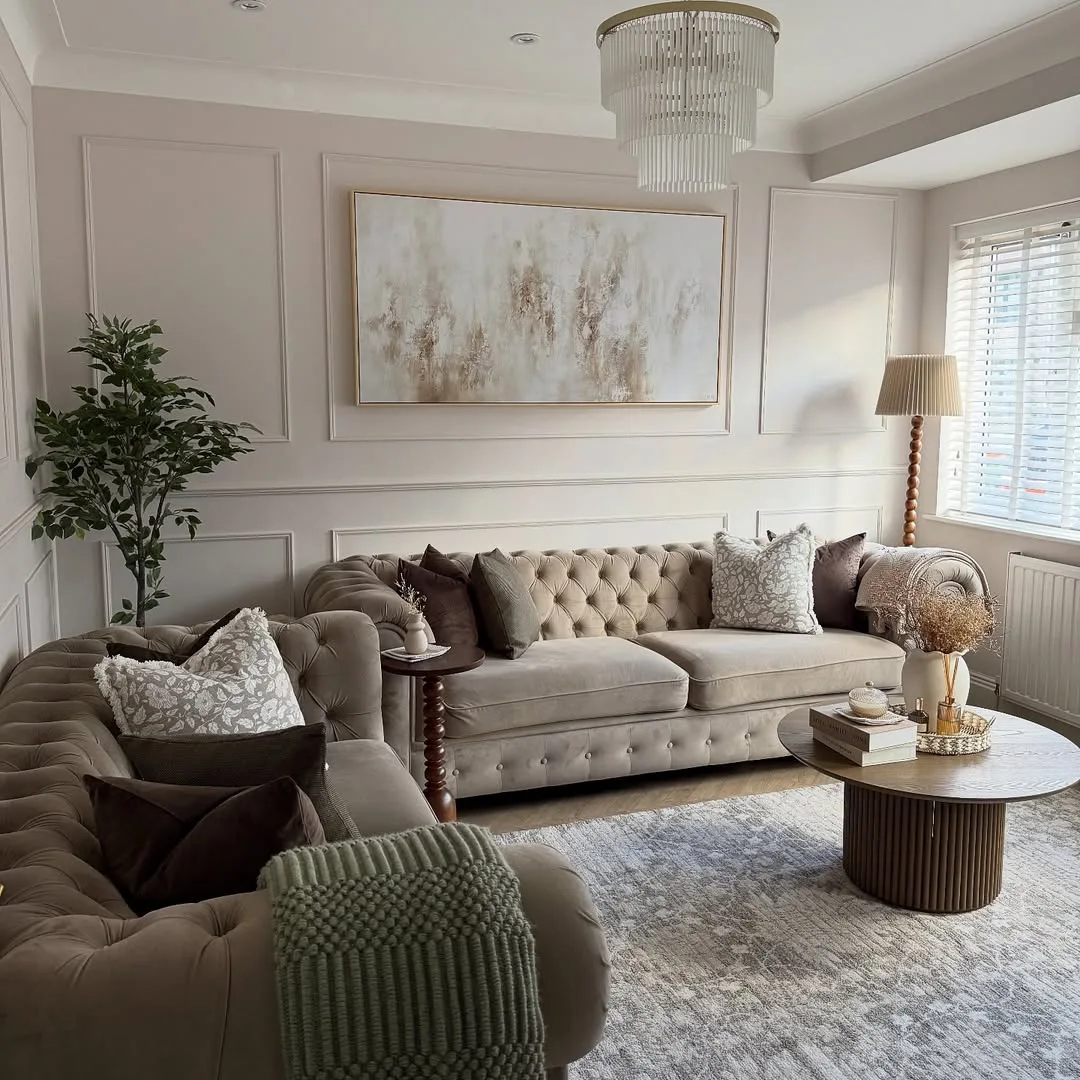
- Living room: 2700K, CRI 90+, dimmable. Combine cove LED strips (indirect), downlights (direct), and accent spots for artwork/plants
- Master bedroom: 2700K warm white for ambiance, separate reading light at 3000K at bedside
- Kitchen: 3500K–4000K under-cabinet LED strips for task work, 3000K for general ceiling lighting
- Bathroom: 3000K around mirror for accurate grooming light, CRI 90+ is especially important here
- Study/home office: 4000K neutral white for focus, task lamp with independent switch
- Corridors/staircase: Motion-sensor LED night lights, 2700K at low wattage
Frequently Asked Questions
LED lights use 75–80% less energy than incandescent bulbs for the same light output. For a typical Chennai home running lights 6 hours/day, switching to LED can save ₹800–1,500 per month on electricity bills.
Use warm white (2700K–3000K) for living rooms and bedrooms. Use neutral white (3500K–4000K) for kitchens and study areas. Avoid cool white (6000K+) in living spaces — it looks harsh and clinical in residential interiors.
CRI measures how accurately a light source shows true colours. For home interiors, choose LEDs with CRI 90+ — this makes skin tones, food, fabrics, and wall colours look natural and vibrant rather than washed out.
Yes — LEDs emit very little heat compared to incandescent or halogen bulbs. In Chennai's hot climate, this is a meaningful advantage. Traditional bulbs emit 90% of energy as heat, adding to room temperature and AC load. LEDs stay cool and reduce cooling requirements.