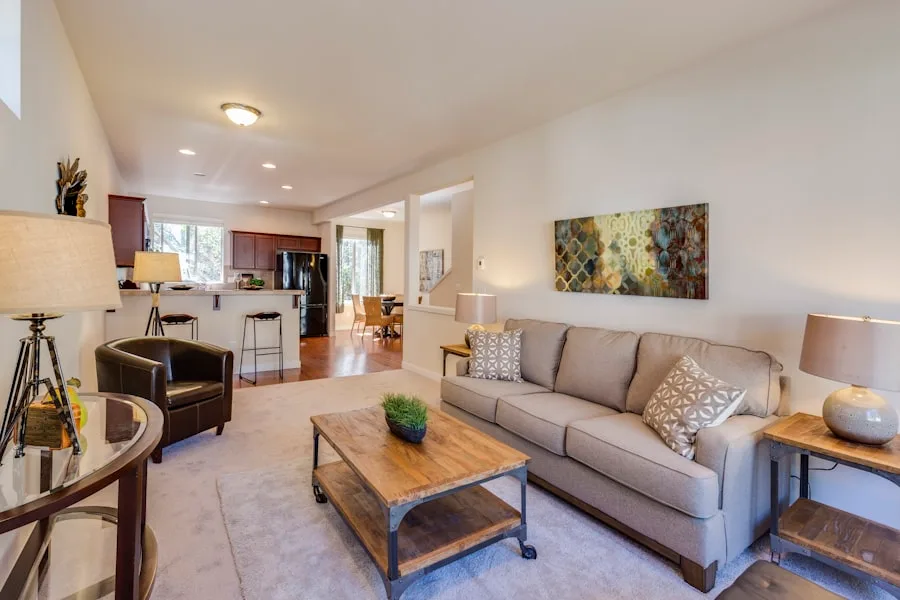
The Three Layers of Lighting
Layer 1: Ambient (General) Lighting
Ambient lighting provides the overall illumination for a room — enough to move around safely and perform general activities. In modern interiors, this comes from: recessed downlights in the ceiling, cove lighting behind a false ceiling valance (indirect, very soft), or a large pendant/chandelier as the primary source. Avoid: a single harsh central fluorescent tube. It provides ambient light technically but does it badly.
Layer 2: Task Lighting
Task lighting provides focused illumination for specific activities where more light is needed: cooking on the kitchen counter, reading in bed, applying makeup at a dressing mirror, working at a desk. Task lighting should be positioned to illuminate the work surface without creating shadows — which means the light source must be in front of or beside the person, not behind them.
Common task light applications:
- Under-cabinet kitchen lights (strip LEDs) — illuminate counter surface for cooking prep
- Bedside reading lamps with adjustable arms
- Study desk lamp positioned to the left of a right-handed person (or vice versa)
- Mirror-adjacent wall lights in bathrooms for even facial lighting
Layer 3: Accent Lighting
Accent lighting draws the eye to specific features — artworks, architectural details, plants, a display shelf, or a textured wall. It creates depth and drama. Without accent lighting, a room is two-dimensional regardless of how good the design is. Common accent lighting: adjustable directional spotlights, picture lights, LED strip lighting inside display shelving, uplighters behind plants.
Room-by-Room Application
Living Room
- Ambient: Cove lighting in false ceiling (warm white, 2700K) + a statement pendant or chandelier
- Task: Floor lamp beside sofa for reading; table lamp on console for side illumination
- Accent: Adjustable spotlight on artwork or feature wall; LED strips inside TV unit display shelving
Kitchen
- Ambient: Recessed downlights (bright, 4000K neutral white) throughout kitchen ceiling
- Task: Under-cabinet LED strip lights above counter work areas; pendant lights above island if you have one
- Accent: Interior lighting inside glass-fronted upper cabinets; a statement pendant above the dining table adjacent to the kitchen
Bedroom
- Ambient: Warm cove lighting in false ceiling (2700K) — never harsh downlights directly above the bed
- Task: Bedside reading lamps with independent switches; a dedicated study lamp if there is a desk
- Accent: Subtle uplighter behind a plant; LED strip inside the wardrobe (triggers when door opens)
Colour Temperature Guide
Colour temperature is measured in Kelvin (K). Lower = warmer:
- 2700K — Warm White: Bedroom, living room ambient, dining room. Feels intimate and relaxing.
- 3000K — Soft White: Transitional spaces, bathrooms (more flattering to skin tone than cool white).
- 4000K — Neutral/Cool White: Kitchen, study, home office. Supports concentration and task work.
- 5000K–6500K — Daylight: Rarely used in residential interiors. Clinical feel. Best reserved for garages, utility rooms, and professional workspaces.
Common Lighting Mistakes
- Recessed downlights directly above a bed or sofa — creates harsh glare when lying down or relaxed
- All-same colour temperature throughout the home — monotonous; miss the opportunity to create different moods in different rooms
- Forgetting switches: three-way switching (control lights from multiple points) is essential in bedrooms and living rooms
- Not planning lighting before the false ceiling is done — adding cove lights after the ceiling is complete is difficult and expensive
- Too many spot lights in a small room — creates a stark, cafeteria feel instead of a warm home feel
Lighting design is one of the most impactful yet overlooked elements of a home interior. It should be planned with your interior designer at the same time as the false ceiling — not as an afterthought. See also our guide on how to plan home interiors from scratch.
Frequently Asked Questions
The three layers are: ambient (general room illumination), task (focused light for specific activities like cooking or reading), and accent (directional light to highlight features or artworks).
2700K warm white is ideal for bedrooms. It creates a relaxing, intimate atmosphere. Avoid cool white (4000K+) in bedrooms as it inhibits melatonin production and disrupts sleep.
A combination of recessed downlights (4000K) for general kitchen illumination, LED strip lights under wall cabinets for counter task lighting, and a statement pendant above any dining area adjacent to the kitchen.
Yes, absolutely. Cove lighting for ambient illumination must be built into the false ceiling structure. Plan all lighting types and switch positions before the civil and false ceiling work begins.