50+ Answered Questions

Interior Design Questions — Answered for Chennai Homeowners

Everything Chennai homeowners ask before planning home interiors — from cost and timeline to materials, room planning, vastu, and how to choose the right company. Real answers, specific to Chennai.

Soft neutral bedroom interior design Chennai Contemporary neutral living room interior design Chennai Modular kitchen interior design Chennai
1

Cost & Budget

How much does home interior design cost in Chennai?

Home interior design in Chennai typically ranges from ₹3.5 lakh for a basic 1BHK scope to ₹20 lakh or more for a fully loaded 3BHK with premium finishes. A practical 2BHK package covering kitchen, two wardrobes, TV unit, and lofts usually falls between ₹6 lakh and ₹12 lakh depending on material grade, hardware quality, and the number of rooms included.

The wide range exists because the word "interiors" can mean anything from laminate kitchen cabinets to PU-finished veneer wardrobes — scope and material level drive the number far more than company size. Use a detailed scope list as the starting point, not a vague package title.

What is the cost of a modular kitchen in Chennai?

A modular kitchen in Chennai typically costs between ₹1.2 lakh and ₹4.5 lakh depending on the linear feet of cabinetry, shutter finish, and accessory level. A straightforward parallel or L-shaped kitchen with laminate shutters and basic pull-out baskets usually falls between ₹1.4 lakh and ₹2.2 lakh.

Upgrading to acrylic or membrane shutters, soft-close hinges, tall units, and accessories from brands like Hafele or Hettich can push the cost to ₹3 lakh to ₹4.5 lakh. Countertop material — quartz being the most popular choice in Chennai right now — adds another ₹20,000 to ₹60,000 depending on slab thickness and brand.

How much does a wardrobe cost in Chennai?

A standard 6-foot wardrobe in Chennai costs between ₹45,000 and ₹1.4 lakh depending on whether it is hinged or sliding, the shutter finish, and internal fittings. Basic laminate hinged wardrobes start around ₹45,000 to ₹65,000 for a 6-foot unit. Sliding wardrobes with aluminium frames and glass or mirror panels cost more, typically ₹80,000 to ₹1.2 lakh.

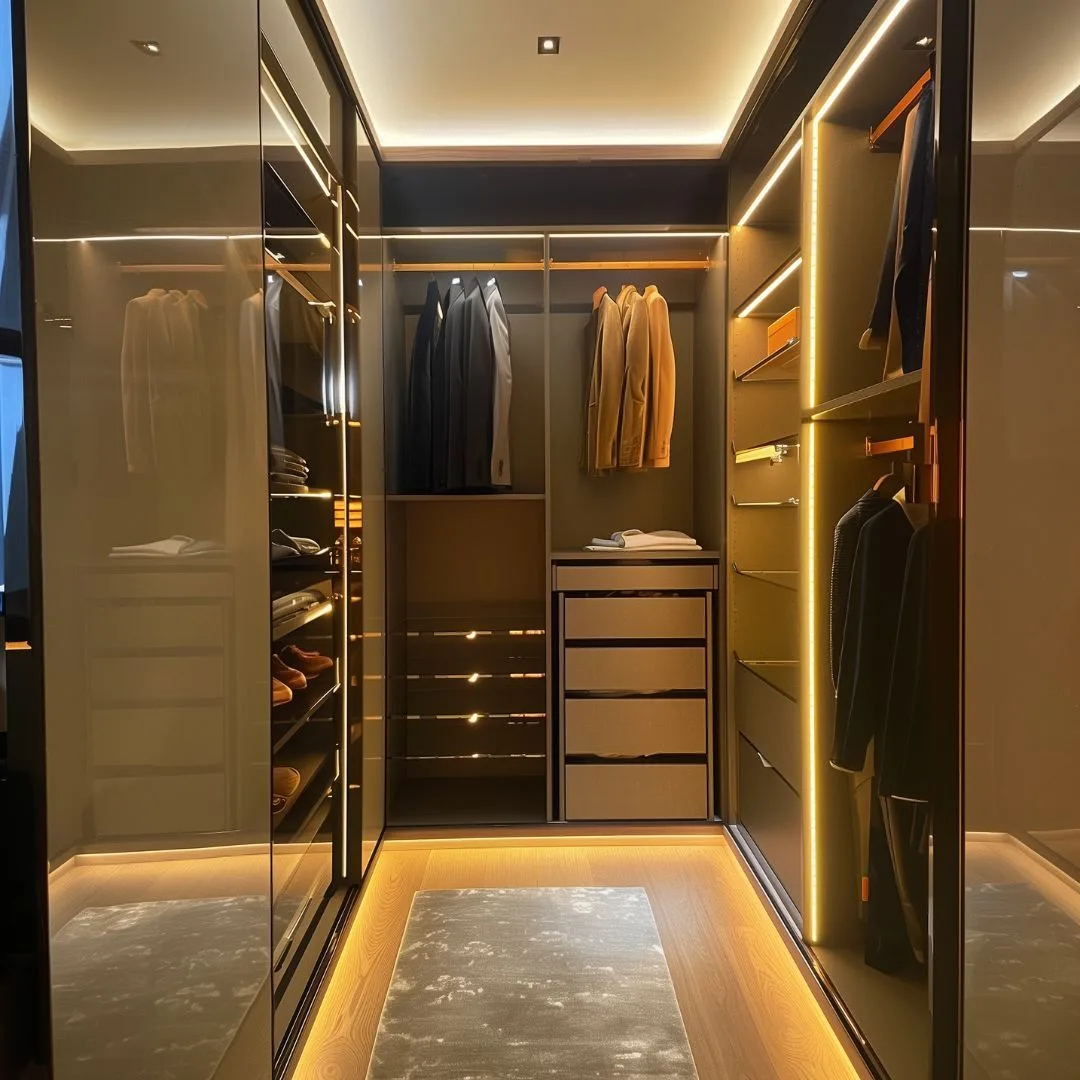
Walk-in wardrobes with PU or veneer finishes and accessories like trouser racks, jewellery drawers, and mirror units can cost ₹1.5 lakh to ₹3.5 lakh depending on size and specification.

What is the cost of false ceiling in Chennai?

False ceiling in Chennai is typically priced per square foot and ranges from ₹80 to ₹250 per sqft depending on the type and complexity. A basic gypsum board false ceiling with a perimeter cove runs ₹80 to ₹120 per sqft including labour. POP false ceiling with mouldings is slightly cheaper on material but labour-intensive.

Coffered ceilings, multiple levels, or those with integrated LED strips and architectural lighting can cost ₹150 to ₹250 per sqft. For a standard Chennai 2BHK living room of about 200 sqft, expect to budget ₹18,000 to ₹50,000 for the false ceiling alone.

Is ₹5 lakh enough for 2BHK interiors in Chennai?

₹5 lakh can cover a carefully scoped 2BHK interior in Chennai, but it requires clear prioritisation. At this budget, you can realistically do a modular kitchen with laminate shutters, one master bedroom wardrobe, a TV unit, and a few loft units. You would need to skip false ceiling, skip the second bedroom wardrobe, use entry-level hardware, and avoid decorative wall panels or accent finishes.

Many Chennai families start with this budget and complete the remaining rooms in phase two. A good interior company will help you sequence the scope sensibly rather than compromising on structural quality to fit everything in.

What is the average interior design cost per sqft in Chennai?

The per-sqft interior design cost in Chennai is commonly quoted between ₹800 and ₹2,500 per sqft for residential full-home scope. However, this metric is misleading because it is calculated against carpet area, and the actual spend depends on how much storage you build — not how large the flat is.

Two identical 1,000 sqft flats can have radically different costs if one has a plain kitchen and one wardrobe while the other has a full modular kitchen, three wardrobes, false ceiling, and a study unit. Use the per-sqft figure only as rough orientation, not as a planning number.

Why does interior design cost vary so much between companies in Chennai?

Interior design cost varies between Chennai companies primarily because of differences in scope definition, material specification, and overhead structure. A smaller local workshop may quote ₹6 lakh for a 2BHK using thinner plywood and basic laminate, while a mid-size design firm quotes ₹9 lakh for the same home using 18mm BWR ply, soft-close hardware, and acrylic shutters with a 5-year warranty.

The lower quote is not necessarily a better deal — it often reflects a lower specification that you only discover after handover. Always compare quotations line by line on material thickness, hardware brand, and warranty coverage, not just the final number.

What is included in a full home interior package in Chennai?

A full home interior package in Chennai typically includes: the modular kitchen, all bedroom wardrobes, TV unit, loft units in hall and bedrooms, utility cabinet, crockery unit, false ceiling in living room and master bedroom, and basic electrical points for cabinetry lighting. Some packages also include a pooja unit, study table, dresser, and shoe cabinet.

What is usually excluded: civil work, floor tiling, painting, bathroom fittings, curtains, and loose furniture. Always ask for a room-wise itemised list when evaluating a full-home package — a vague single number is a red flag.

Are there hidden charges in interior design quotations in Chennai?

Yes, hidden charges are common in Chennai interior design quotations, particularly from companies that lead with a low headline number. The most frequent add-ons include: transportation and site-handling charges (3 to 5%), electrical work for new points and switches, civil work like wall breaking or levelling, GST (18% on service, 28% on some goods), installation charges listed separately from product cost, and post-installation touch-up charges.

To avoid surprises, ask the company to give you a fully loaded quotation including GST, transportation, installation, and civil estimates before signing any agreement.

How do I compare interior design quotes in Chennai?

Comparing interior design quotes in Chennai correctly requires looking beyond the total number. First, check that each quote covers the same scope — same rooms, same units, same linear feet of kitchen. Second, compare plywood specification: 18mm BWR or MR grade is standard; anything thinner or ungraded is a quality cut. Third, compare hardware brand — Hafele, Hettich, and Ebco are reliable; no-brand hardware fails faster in Chennai's humidity.

Fourth, check warranty terms: a 5-year warranty on workmanship and materials is the minimum standard from a credible company. Finally, confirm whether GST and installation are included in the total.

Chennai living room interior design — contemporary neutral style
2

Timeline & Process

How long does interior design take in Chennai?

A full home interior project in Chennai typically takes 8 to 14 weeks from order confirmation to final handover, depending on scope and factory lead time. The design and planning phase takes 2 to 3 weeks, factory production of modular units takes 4 to 6 weeks, and on-site installation and finishing takes 2 to 4 weeks.

Simpler scopes like kitchen-plus-wardrobes can be completed in 6 to 8 weeks. Custom work, imported materials, or projects with significant civil changes can stretch beyond 14 weeks. Always confirm the timeline in writing and ask for milestone dates by unit type.

What is the process of getting home interiors done in Chennai?

The interior design process in Chennai typically follows these steps: initial consultation and requirement discussion, followed by a site visit and measurement. The designer then creates a 3D layout and detailed quotation, which you review and finalise. After signing the agreement and making an advance payment (usually 40 to 50%), the factory begins production.

When units are ready, the installation team moves in and works room by room. After installation, a snag list is raised, punch-list items are fixed, and the project is handed over with a warranty document. A good company assigns a project manager who keeps you updated at every milestone.

Can I get my Chennai flat interiors done before possession?

Yes, you can begin planning and even place your order before possession — this is actually advisable. Most Chennai interior companies allow you to finalise designs and drawings using the builder's floor plan. Factory production can begin before you get keys, so that when possession happens, installation can start almost immediately.

This approach saves 4 to 6 weeks of waiting time compared to starting fresh after possession. Just ensure that any civil changes like wall modifications or floor levelling are confirmed with your builder before finalising the interior layout.

What happens during the site visit for interior design?

During a site visit, the interior design team takes precise measurements of all walls, window and door openings, beam positions, electrical panel locations, and plumbing points. They assess the ceiling height, check the floor condition, note existing electrical points, and identify any structural columns or constraints that will affect the layout.

In Chennai flats, they also check for cross-ventilation requirements, the direction of the kitchen relative to the window, and utility area access. This information is used to create accurate 3D designs and a fully measured quotation. A proper site visit takes 60 to 90 minutes for a 2BHK.

How many weeks does modular kitchen installation take?

Modular kitchen installation in Chennai typically takes 3 to 7 working days for the actual site work, once the factory-made cabinets arrive. The cabinets are fitted first, then the countertop is cut and installed (quartz slabs take 1 to 2 extra days for templating and cutting), followed by the sink, faucet, appliances, and accessories.

If the kitchen involves a chimney or hob installation, an LPG plumber visit is also required. Tiling behind the kitchen adds another 1 to 2 days if not already done. The total elapsed time from order to kitchen handover is usually 6 to 10 weeks when factory production time is included.

Can interior work happen while I'm living in the house?

Interior work can happen while you are living in the house, but it requires planning and tolerance for disruption. Most Chennai companies do room-by-room installation to allow families to remain at home. The kitchen installation period is typically the most disruptive, as cooking becomes difficult for 3 to 5 days.

Bedroom wardrobe installation is quicker and less intrusive — usually 1 to 2 days per room. Dust, noise, and worker movement are unavoidable, so it helps to have a temporary kitchen arrangement and a designated storage space for displaced furniture. Discuss a work-schedule plan with your interior team before installation begins.

What is the right time to plan interiors for a new flat in Chennai?

The right time to start planning interiors for a new Chennai flat is 3 to 4 months before your expected possession date. This gives you enough time to visit showrooms, compare companies, finalise designs, and allow factory production to complete before you need to move in.

Many Chennai homeowners make the mistake of starting the process only after getting possession, which leads to a 2 to 3 month wait to move in. Starting early also lets you coordinate any civil changes — like adding an electrical point or removing a half-wall — before the builder closes out your flat.

Do interior companies give 3D designs before starting work?

Yes, virtually all established interior companies in Chennai provide 3D visualisations before you sign or pay. The 3D design shows you exactly how the kitchen, wardrobes, TV unit, and other furniture will look in your actual space with the chosen colours and finishes. This stage is where you request changes to shutter design, colour combinations, internal fittings, or layout.

Most companies offer 2 to 3 revision rounds within the design phase. Be cautious of companies that skip 3D design or provide only rough sketches — it often leads to unpleasant surprises during installation.

3

Materials & Quality

What is the best material for modular kitchen shutters in Chennai?

The most popular and practical shutter material for modular kitchens in Chennai is acrylic-finish shutters on HDF or MDF boards. Acrylic gives a high-gloss finish, is easy to wipe clean, resists the humidity common in Chennai kitchens, and holds colour well over years of use.

Membrane shutters (PVC-wrapped MDF) are a slightly more affordable option that offers good moisture resistance and a range of texture finishes, making them popular in mid-budget kitchens. Laminate shutters are the most economical and durable for heavy-use kitchens. PU-painted shutters look premium but require more careful cleaning to prevent yellowing near cooking heat.

Acrylic vs membrane vs laminate — which is better for Chennai climate?

For Chennai's combination of high humidity and heat, membrane shutters offer the best balance of moisture resistance and affordability, as the PVC wrapping seals the MDF core from moisture absorption. Acrylic is glossier and easier to clean but shows fingerprints and minor scratches more readily. Laminate is the most durable against scratches and heat exposure, making it excellent near the cooking zone.

Laminate holds up particularly well in Chennai kitchens where coconut oil and spice fumes are common. For a practical approach: use laminate below the counter (near heat and water) and acrylic or membrane above the counter as a sensible hybrid combination.

What is marine plywood and why does it matter?

Marine plywood is a high-density plywood manufactured with waterproof phenolic glue that prevents delamination even under sustained exposure to moisture. It matters for Chennai homes because the coastal humidity, kitchen steam, and bathroom-adjacent walls create conditions where ordinary plywood swells, warps, and separates within 3 to 5 years.

BWR (Boiling Water Resistant) plywood is the minimum residential standard and is what most mid-segment interior companies use. True marine grade is used for areas with direct water exposure like the cabinet below the kitchen sink or bathroom vanity. Specifying the plywood grade in your contract protects you from substitution during production.

Which wardrobe material lasts longest in Chennai humidity?

For wardrobe carcasses (the main body) in Chennai, 18mm BWR-grade or MR-grade plywood is the most durable and lasting choice. It resists coastal humidity significantly better than particle board (also called wood board or HDHMR), which tends to swell and sag at hinges within 3 to 4 years in humid conditions.

For shutter material, PU-painted or laminate-finish MDF shutters perform well in bedrooms away from direct moisture. Veneer shutters are beautiful but require annual maintenance in Chennai's climate to prevent the veneer from lifting at the edges. Always ask for anti-termite treatment on the plywood before it leaves the factory.

What is PU finish and is it worth it?

PU (polyurethane) finish is a paint-based shutter finish where multiple coats of polyurethane paint are applied to MDF and cured in a controlled environment, giving a smooth, matte or semi-gloss surface that looks like high-end furniture. It is used on wardrobes, kitchen shutters, and TV units to achieve a luxury appearance at less than the cost of solid wood.

In Chennai, PU finish is worth it for master bedroom wardrobes and TV units where aesthetics are a priority and direct heat or cooking fumes are not a concern. It is not recommended for kitchen shutters near the cooking zone, as heat and oil mist cause yellowing over time. PU adds roughly 20 to 35% to the shutter cost compared to laminate.

What hardware brands are good for modular kitchens?

Hafele, Hettich, and Blum are the three most trusted hardware brands for modular kitchens in Chennai, covering hinges, drawer channels, pull-outs, and accessories. Hafele is widely used across Chennai projects and offers a comprehensive range from functional to premium. Hettich is popular for its drawer systems and soft-close mechanisms. Blum is the premium choice — its Servo-Drive and Aventos lift systems are found in high-end Chennai apartments.

For a mid-budget kitchen, Hafele or Hettich provides excellent quality and 10-year manufacturer warranties on most mechanisms. Ebco is a reliable Indian alternative that performs well at a lower price point for basic hinges and channels.

What is the difference between MDFlite and BWR plywood?

BWR (Boiling Water Resistant) plywood is made from layers of wood veneer bonded with moisture-resistant phenol formaldehyde resin, giving it excellent structural strength and humidity resistance — it is the standard substrate for quality modular furniture in Chennai. MDFlite (Medium Density Fibreboard lite) is a lighter, engineered wood product made from wood fibres and resin, with a very smooth surface ideal for painted or PU finishes.

MDFlite is better for shutters and decorative panels where smooth surface finish matters; BWR plywood is better for the carcass (body) of the cabinet where structural strength and moisture resistance are critical. A well-specified Chennai kitchen uses BWR for the box and MDF or HDF for the shutters.

Which countertop material is best for Chennai kitchens?

Engineered quartz is the best countertop material for Chennai kitchens today, offering a non-porous surface that resists staining, is easy to clean, handles heat moderately well, and requires no sealing. Granite is the traditional Chennai kitchen choice and remains excellent value — it is heat-resistant, extremely hard, and long-lasting, though it is porous and needs periodic sealing.

Compact laminate countertops are the most affordable option and work well in light-use kitchens. Avoid marble for the main kitchen counter in Chennai homes that cook daily — it stains from turmeric and acidic tamarind-based cooking and requires constant care. For the wet area near the sink, quartz or granite is always preferred over laminate.

Free Consultation · Chennai

Get a free site visit & fixed price quote.

No pressure. Our designer visits, takes measurements, and gives you a clear scope with pricing within 48 hours.

We call back within 30 minutes · No spam ever

4

Room-Specific Questions

How do I plan a modular kitchen for a small Chennai flat?

Planning a modular kitchen for a small Chennai flat (typically 6 to 9 feet long) requires maximising vertical storage and choosing the right layout. An L-shaped layout works best for most compact Chennai kitchens as it separates the cooking and prep zones and keeps traffic flow clean. Use full-height wall cabinets up to the slab above to capture every inch of vertical space — this is where most Chennai kitchens lose storage capacity.

Include a deep pan-drawer below the hob instead of a shelf, which makes accessing vessels significantly easier. A pull-out bottle unit on the side of the base cabinet adds usable storage in what is often a dead corner. Avoid over-accessorising a small kitchen — a few well-chosen pull-outs beat many underused accessories.

What should I include in a 2BHK interior design in Chennai?

A well-planned 2BHK interior design in Chennai should include: a full modular kitchen with loft above, a utility cabinet or washing machine enclosure, two bedroom wardrobes (one for master, one for the second bedroom), loft storage in both bedrooms, a TV unit with storage in the living room, a crockery unit or buffet cabinet in the dining area, and a shoe cabinet near the entrance.

False ceiling in the living room and master bedroom is increasingly standard in Chennai 2BHKs. Optional additions include a study desk in the second bedroom, dresser unit in the master bedroom, and a balcony storage unit. Prioritise kitchen and wardrobes first when budget is tight — decorative elements can follow in a second phase.

How many wardrobes should a 3BHK Chennai flat have?

A standard 3BHK Chennai flat should have 3 wardrobes — one per bedroom. The master bedroom wardrobe is typically the largest, often a full wall unit of 8 to 10 feet covering clothes, accessories, and a built-in dresser or mirror. The second bedroom wardrobe is usually 6 to 7 feet. The third bedroom wardrobe, which often serves as a children's room or guest room, is typically 5 to 6 feet with a flexible interior layout.

Some 3BHK homes also include a linen storage unit in the corridor, which is extremely practical for storing bedsheets, towels, and seasonal items without consuming wardrobe space in the bedrooms.

Should I choose a hinged or sliding wardrobe for my Chennai bedroom?

The choice between hinged and sliding wardrobes in a Chennai bedroom depends primarily on floor space in front of the wardrobe. Hinged wardrobes require about 2 to 2.5 feet of clear space in front for the doors to swing open, so they work best in bedrooms with generous room depth. Sliding wardrobes need no swing clearance and are ideal for compact Chennai bedrooms where the wardrobe faces the bed directly.

Hinged wardrobes offer better interior access — you can see the entire contents at once — while sliding wardrobes mean only half the interior is accessible at any time. For bedrooms above 11 feet deep, hinged is practical and more storage-efficient; for smaller bedrooms, sliding is the smarter choice.

What is a good living room interior design for Chennai apartments?

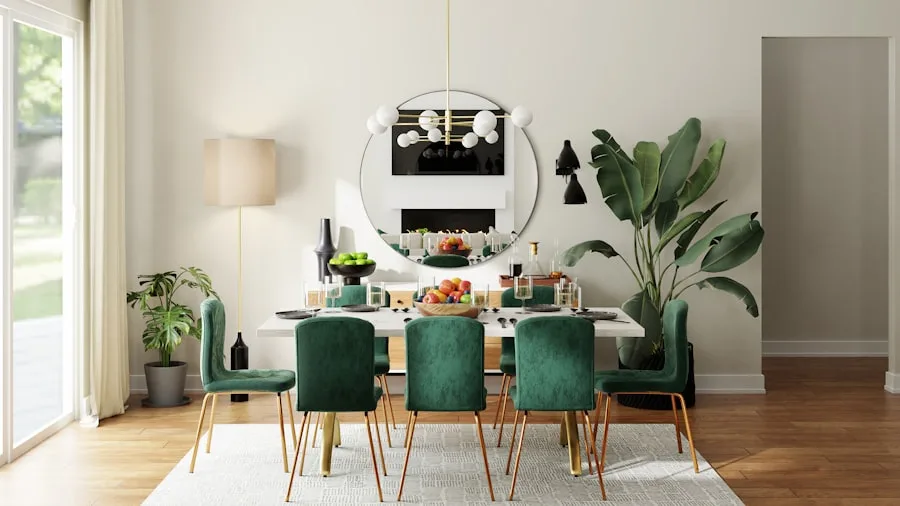
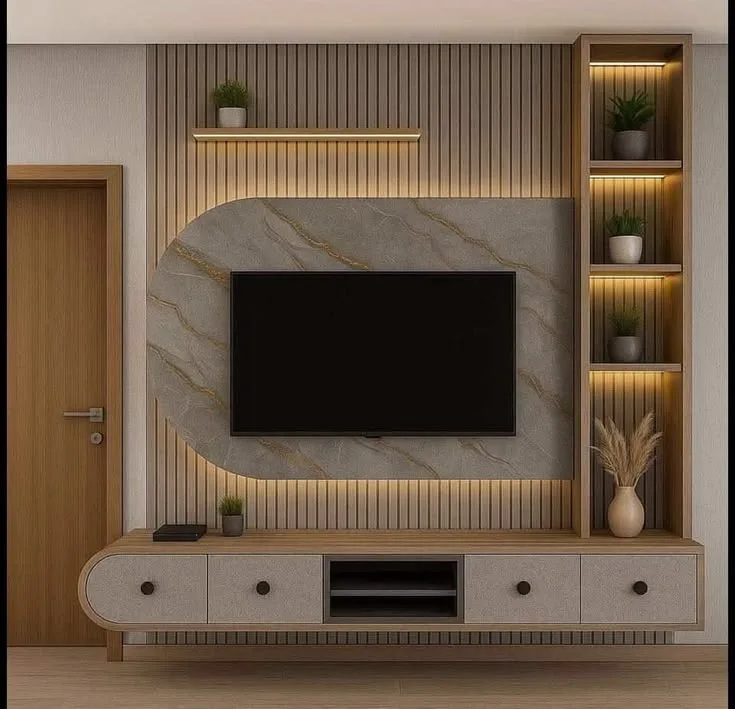
A good living room interior design for a Chennai apartment balances storage, visual openness, and ventilation-friendly layout. A wall-mounted TV unit with floating shelves and a closed cabinet below keeps the floor clear and makes the room feel larger. A false ceiling with a cove light and a subtle feature wall behind the TV (fluted panels, stone cladding, or a warm accent colour) adds character without heaviness.

In Chennai's climate, avoid dark or heavy upholstery that traps heat — light linens, cotton, and easy-clean fabrics work better. Keep the sofa arrangement away from the air-conditioning unit wall to avoid direct drafts. Potted plants near the balcony door soften the space and thrive in Chennai's natural light.

Do Chennai flats need false ceiling?

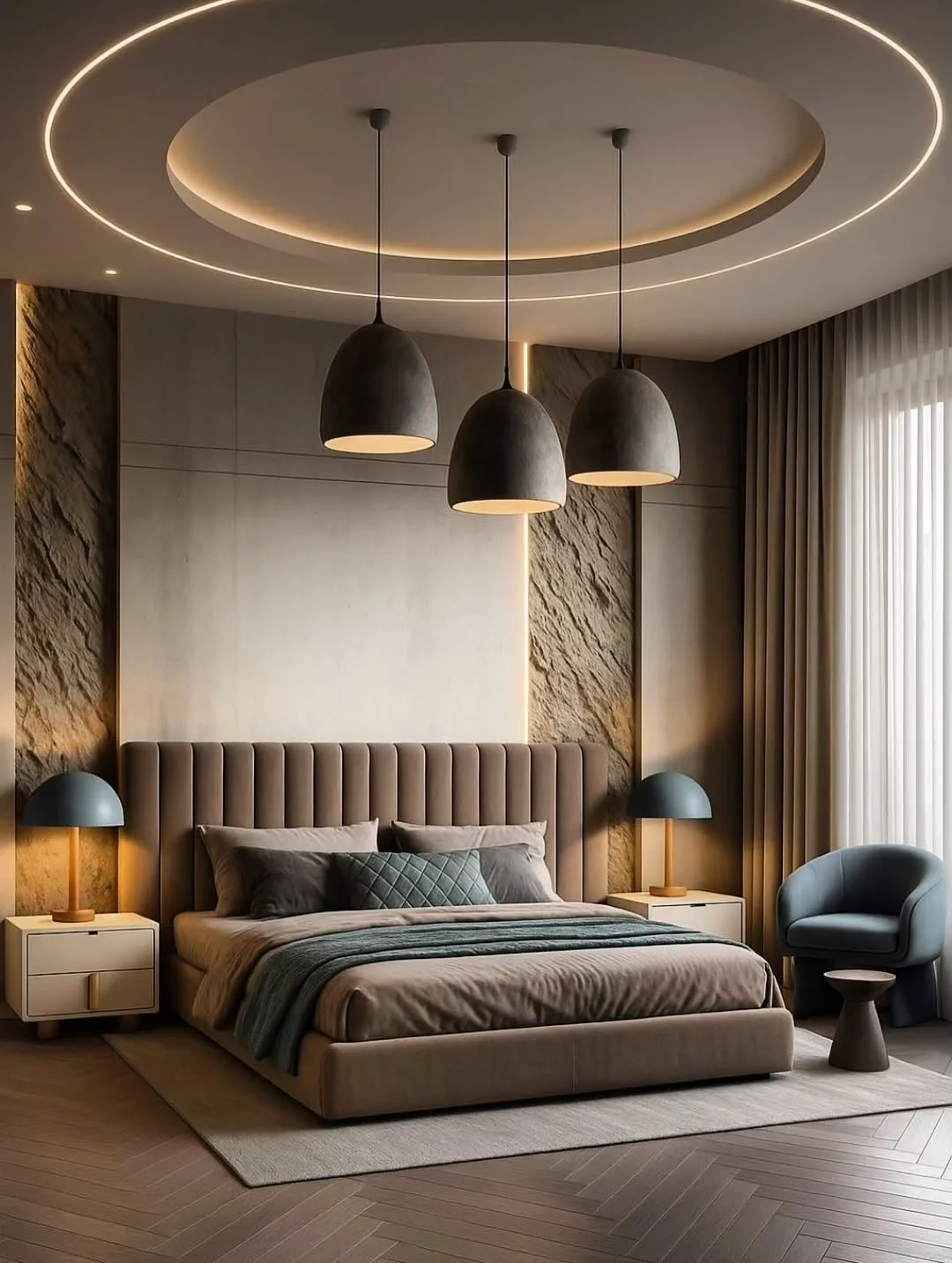
False ceiling is not structurally mandatory in Chennai flats, but it adds significant visual value and practical utility. Most Chennai apartments have slab-to-floor heights of 9.5 to 10.5 feet, which is tall enough to accommodate a false ceiling (typically dropped 8 to 12 inches) while maintaining a comfortable ceiling height of 8.5 to 9.5 feet.

False ceiling in the living room allows you to conceal electrical wiring, run perimeter cove lighting, and install a ceiling AC unit cleanly. In bedrooms, it frames the space and creates a finished look. If budget is limited, prioritise false ceiling in the living room first — it has the highest visual impact per rupee spent.

How do I plan a pooja room in a Chennai apartment?

Planning a pooja room in a Chennai apartment depends on whether the builder has allocated a dedicated space or whether you are carving one out of an existing room. If a separate pooja room exists (common in Chennai flats), the typical approach is a marble or granite floor platform (paadham), a marble or granite shelf for idols, a wooden door with carved or glass panels, and a small storage cabinet for puja items.

For apartments without a dedicated room, a pooja unit in the living room or kitchen — a tall cabinet with a hinged door that reveals the altar — is the most common solution. Vastu considerations commonly followed in Tamil Nadu include placing the pooja unit in the northeast or east-facing wall of the room.

What is a good TV unit design for a Chennai living room?

The most popular TV unit design for Chennai living rooms in 2025 is a full-wall composition with a floating TV panel, flanked by open shelving for decor and closed cabinets below for storage. Fluted wood or fluted MDF panels are extremely popular as a feature wall backdrop behind the TV — they add texture without requiring paint or wallpaper.

A combination of warm teak laminate or veneer with matte white or light grey painted shutters creates a balanced, contemporary look that suits most Chennai apartment colour palettes. Keep wire management in mind — plan conduits for TV, set-top box, and streaming device cables inside the unit. Add a recessed LED strip at the back of the TV for ambient lighting that reduces eye strain in the evenings.

Is it worth doing a full home interior or room by room?

Doing a full home interior at once is almost always more cost-effective than going room by room, primarily because factory setup charges, transportation, and installation mobilisation costs are shared across a larger order. With a full-home order, you also get a consistent design language across all rooms and avoid the jarring patchwork look that room-by-room projects sometimes produce.

However, if budget is the constraint, a phased approach is completely valid — prioritise the kitchen first (most used, most complex), then master bedroom wardrobe, then remaining rooms. Tell your interior company upfront that you are planning it in phases so they can design the entire home now and execute it in tranches without inconsistency.

What is loft storage and how much does it cost in Chennai?

Loft storage refers to the overhead cabinet built between the top of a door or wardrobe and the ceiling, making use of space that is otherwise wasted. In Chennai apartments, lofts are typically 1 to 1.5 feet in height and span the full width of the doorway or wardrobe. They are commonly used to store seasonal items, luggage, and rarely used household items.

A standard loft unit in Chennai costs between ₹8,000 and ₹18,000 depending on width, shutter type, and whether it has a push-to-open or knob mechanism. A full set of lofts across a 2BHK — bedroom doors, kitchen door, and utility area — typically adds ₹30,000 to ₹55,000 to the total interior cost.

Elegant panelled neutral living room interior design Chennai
5

Company & Trust

How do I choose the right interior designer in Chennai?

Choosing the right interior designer in Chennai involves checking five things: first, their portfolio — does their previous work match the style and budget level you want? Second, their process — do they provide 3D designs, itemised quotations, and a clear project timeline? Third, their factory — modular furniture made in their own factory or a supervised facility is more reliable than sourced from multiple vendors.

Fourth, references — ask to speak with or visit 2 to 3 completed projects in Chennai. Fifth, warranty — a company confident in their work will offer at least a 5-year warranty on structural components and 1 year on hardware. Avoid companies that pressure you to sign without providing a detailed scope document.

What questions should I ask an interior designer before signing?

Before signing with any Chennai interior designer, ask these questions: What plywood grade and thickness do you use for kitchen and wardrobe carcasses? What hardware brand is specified in this quote? Is GST, transportation, and installation included in this price? What is the payment schedule and what triggers each milestone payment? Who is my point of contact during production and installation?

What is covered under your warranty and for how long? Can I visit an ongoing or completed site of a similar project? What happens if there is a delay? Getting clear, direct answers to these questions separates serious companies from those who rely on post-signing upselling.

What is a fixed price interior design contract?

A fixed price interior design contract is an agreement where the total project cost is clearly specified and cannot increase after signing, provided the scope does not change. This protects homeowners from the common Chennai complaint of quotations that grow by 15 to 30% during execution due to add-on charges, material upgrades, or vague scope items.

In a well-written fixed-price contract, every item is listed with dimensions, material specifications, hardware brand, and unit price. Changes requested by the homeowner after signing are handled through a variation order (VO) process with transparent pricing. Always insist on a fixed-price contract with itemised scope, not a loosely worded "full home package" agreement.

Do interior design companies in Chennai give warranty?

Established interior design companies in Chennai do provide warranty, though coverage and duration vary significantly. The industry standard for modular furniture is a 5-year warranty on structural components (carcass, shelving, hinges) and 1 year on hardware and accessories. Some companies offer a 10-year warranty on plywood structure.

Warranties typically do not cover damage caused by water leakage, pest infestation, or physical mishandling. When evaluating a company, ask for the warranty terms in writing as part of the contract — a company that is unwilling to put warranty terms on paper is a company that is not confident in its own workmanship.

What is the difference between a modular kitchen company and an interior designer in Chennai?

A modular kitchen company in Chennai specialises exclusively in kitchen design and manufacturing — they typically do not handle wardrobes, TV units, or overall interior design. They are often a strong choice if you only need the kitchen done, as their product depth and kitchen-specific expertise is higher.

An interior design company handles the full home — kitchen, wardrobes, living room furniture, false ceiling, lighting, and sometimes civil work — under one project and one point of contact. For a full-home project, working with an interior company is usually more coordinated and cost-effective than hiring a kitchen company and multiple other vendors separately.

Should I choose a local Chennai company or a national brand like DesignCafe or Livspace?

Both local Chennai interior companies and national brands have genuine trade-offs. National brands like Livspace or DesignCafe offer standardised processes, technology platforms for tracking your project, and brand accountability — but their prices are often 15 to 30% higher than local companies at equivalent specification, and the designer you meet is typically a sales consultant, not the person executing your project.

A well-established local Chennai interior company offers more direct accountability, faster response to site issues, better knowledge of local vendor ecosystems, and often more flexibility on design customisation. The key is vetting thoroughly — a poorly run local company is worse than a national brand, but a well-run local company typically delivers a better outcome at better value.

How do I avoid getting cheated by an interior designer in Chennai?

The most effective protections against interior design fraud in Chennai are: insist on an itemised quotation with specifications for every line item; get the plywood brand and grade, hardware brand, and shutter material in writing in the contract; never pay more than 50% upfront — structure payments as 40% advance, 40% before delivery, and 20% on snag-free handover; visit the factory or showroom before signing; ask for references from 2 completed Chennai projects and actually call them.

Do not get pushed into signing on the same day as your first meeting. If a company refuses to provide itemised specs or pressures you to sign quickly with a large advance, treat it as a serious red flag and walk away.

What is a reasonable payment schedule for interior work in Chennai?

A reasonable and fair payment schedule for interior work in Chennai follows project milestones rather than calendar dates. The most common structure used by credible companies is: 40 to 50% advance on signing (covers factory production), 40 to 45% on delivery of materials to site (confirms production is done), and 10 to 15% on final handover after snag clearance.

Avoid companies that ask for 70% or more upfront before any work begins, as this removes your leverage if there are quality or timeline issues. The final 10 to 15% retained until handover is your strongest tool for ensuring punch-list items are completed properly and promptly.

6

Tamil Nadu & South India Specific

Is vastu important for interior design in Tamil Nadu?

Vastu Shastra remains an important consideration for a significant proportion of Tamil Nadu homeowners when planning interiors, particularly for the placement of the pooja room, kitchen, master bedroom, and main entrance. Common vastu preferences in Tamil Nadu include: pooja in the northeast or east-facing corner, kitchen in the southeast, master bedroom in the southwest, and the main door opening inward and facing east or north.

A good interior designer in Chennai will factor in vastu requirements alongside practical design constraints without forcing one to override the other. It is worth discussing your vastu preferences upfront so the layout planning accounts for them from the beginning, rather than retrofitting awkward adjustments later.

What is a typical pooja room size in a Tamil Nadu flat?

A dedicated pooja room in a Tamil Nadu flat is typically between 25 and 45 square feet — roughly 5 feet wide by 5 to 8 feet deep. Builder-provided pooja rooms in Chennai apartments are often on the smaller side, around 25 to 30 sqft, which is sufficient for a family altar, a small storage unit, and space to sit or stand for prayer.

The interior of the pooja room commonly includes a marble or granite platform (paadham) for the idols, a wooden or glass door for the cabinet, a small chandelier or LED lighting, and devotional tile or marble wall cladding. Where a separate room is not available, a pooja unit of 4 to 5 feet wide by 7 feet tall is built into the living room or dining area as a self-contained unit.

How do Chennai homeowners typically budget for interiors?

Most Chennai homeowners budget for interiors as a percentage of their property purchase price — the commonly cited figure is 8 to 15% of the property cost for a full-home interior. For a flat purchased at ₹80 lakh in a location like Velachery or OMR, this translates to a ₹6.4 lakh to ₹12 lakh interior budget, which aligns with realistic full-home costs.

Many families also fund their interior using a top-up home loan or interior-specific personal loan, as several banks and NBFCs in Tamil Nadu offer these products with reasonable interest rates. The most practical approach is to start with a scope priority list — kitchen and wardrobes always first — and expand scope to fill the budget rather than trying to stretch a low budget across all rooms at once.

Which Chennai localities have the most interior design projects?

The highest concentration of active interior design projects in Chennai is in the high-growth residential corridors of OMR (Old Mahabalipuram Road), Porur, Perambur, Anna Nagar, Adyar, Velachery, Tambaram, and Sholinganallur. OMR leads in volume because of the high density of IT-corridor apartment projects with new possession deliveries. Anna Nagar and Adyar have a strong market for mid-to-premium budget full-home interiors.

Porur and Tambaram are growth markets with a high concentration of first-time homeowners who are budget-conscious but quality-focused. Localities like Pallikaranai, Medavakkam, and Guduvancheri are emerging rapidly as affordable housing demand drives interior project volumes.

Do Chennai flats typically have a separate pooja room or kitchen pooja unit?

Chennai apartment builders have increasingly included a dedicated small pooja room in their floor plans over the last decade, particularly in the ₹60 lakh to ₹1.5 crore segment targeting the city's traditional Hindu Tamil homeowner base. However, smaller 1BHK and 2BHK units below 900 sqft often do not have a separate pooja room due to space constraints.

In these cases, a kitchen pooja unit (a small enclosed shelf with a wooden door built into or above the kitchen) or a living room pooja cabinet is the standard solution. Premium 3BHK and 4BHK projects almost universally include a dedicated pooja room of 25 to 40 sqft as a selling feature. The choice between a separate room and a unit is driven by flat size and personal preference.

What are common mistakes Chennai homeowners make when planning interiors?

The most common interior planning mistakes Chennai homeowners make are: starting too late and rushing decisions under move-in pressure; choosing a company based on the lowest quote without comparing specifications; not accounting for GST, civil work, and electrical changes in the budget; over-accessorising the kitchen with pull-outs they will never use; choosing materials by appearance in a showroom without checking how they perform in Chennai's humidity.

Other mistakes include not visiting a completed project of the company before signing, paying too much advance upfront (over 50%), and not getting the scope itemised in the contract — leaving them with no leverage if the company underdelivers. The single most impactful thing a homeowner can do is spend an extra 2 to 3 weeks in the comparison phase rather than rushing the signing decision.

Soft neutral retreat bedroom interior design Chennai
Free Consultation · Chennai

Get a free site visit & fixed price quote.

No pressure. Our designer visits, takes measurements, and gives you a clear scope with pricing within 48 hours.

We call back within 30 minutes · No spam ever